

SECURITIES AND EXCHANGE COMMISSION
Washington, DC 20549
_________________
FORM 6-K
Report of Foreign Issuer
Pursuant to Rule 13a-16 or 15d-16
of the Securities Exchange Act of 1934
For the month of March 2005
REUTERS GROUP PLC
(Translation of registrant’s name into English)
85 FLEET STREET, LONDON EC4P 4AJ, ENGLAND
(Address of principal executive offices)
[Indicate by check mark whether the registrant files or will file annual reports under cover of Form 20-F or Form 40-F.]
Form 20-F X Form 40-F __
[Indicate by check mark whether the registrant by furnishing the information contained in this Form is also thereby furnishing
the information to the Commission pursuant to Rule 12g3-2(b) under the Securities
Exchange Act of 1934.]
Yes No X
SIGNATURES
Pursuant to the requirements of the Securities Exchange Act of 1934, the registrant has duly caused this report to be signed
on its behalf by the undersigned, thereunto duly authorized.
REUTERS GROUP PLC
(Registrant) Dated: March 11, 2005 By:
/s/ Nancy C. Gardner

10 March 2005. BT and Reuters Sign Major Contract
BT also to acquire Radianz from Reuters
London - BT and Reuters (RTR:LSE) today announced that BT will become Reuters supplier of network services in a contract under which Reuters is
expected to spend in the region of $3 billion over eight and
a half years. BT will also acquire Radianz, the leading financial services extranet provider,
from Reuters for a consideration of $175m for the business plus any cash remaining on the balance sheet, net of working capital adjustments, at the date
of
completion.
Under the network services agreement, BT will provide and manage secure data networks for Reuters products and services world wide. This will see
Reuters customers benefit from the breadth and flexibility
of BT's global portfolio of networked IT services. In addition, BT's skills and expertise in the
provision and management of highly resilient networks will enable Reuters to continue the substantial improvements to its products.
The purchase of Radianz is an important step in BT's continuing transformation into a global provider of networked IT services. The move is a logical
evolution for Radianz, strengthening its position as a
neutral, shared market infrastructure provider for the financial services industry. Following the
acquisition, Radianz will continue to provide high quality extranet services for Reuters and the global
financial services market. The company and its
customers will benefit from a broader range of integrated services in the future provided by BT.
Tom Glocer, Reuters Group Chief Executive, said: "The network services agreement with BT signals the start of an important relationship. It will see
Reuters and its customers benefit from the range of communication services that BT and Radianz will provide to the financial services community. Along
with the sale of Radianz, it also sees Reuters exiting the provision and management of data networks.
This is a major contributor to our Fast Forward
business transformation programme and will allow Radianz to build upon its recent successful performance. I look forward to working with BT as a
partner.“
Ben Verwaayen, Chief Executive, BT, said: "I am very excited about the possibilities that come from this relationship and believe the benefits for
both
companies will be significant. For Reuters, having a high-performance communications network is central to its business. The network services contract
is the latest example of major enterprise customers choosing BT as their global communications
partner. The acquisition of Radianz is of strategic
importance as the global financial services market offers a huge opportunity to BT, and this will form the cornerstone of our approach to this sector."
This is the latest in a series of announcements by BT of major customer contract wins. It also follows the acquisitions of Albacom and Infonet. The deal
announced today is the result of the news in October
2004 that BT and Reuters were in exclusive discussions about a long-term network services
agreement and ownership of Radianz. The completion of the network services agreement is subject to the completion of the acquisition of Radianz by
BT, which is
subject to final regulatory approvals and other customary completion conditions, expected in the next three months.
The consideration for BT's acquisition of Radianz from Reuters will be satisfied in cash at completion. Reuters intends to use the proceeds from the sale
of Radianz to invest in its business and pay down debt.
As a result of the transaction, future funding obligations from Reuters to Radianz of $44m will be
extinguished. Radianz had reported net assets of $185m as at 31 December, 2004 and a 2004 loss before tax of $2m (Radianz results are currently
unaudited).

Ends
About Reuters
Reuters (
www.reuters.com), the global information company, provides indispensable information tailored for professionals in the financial services, media and
corporate markets. Its trusted information
drives decision making across the globe based on a reputation for speed, accuracy and independence. Reuters has
14,500 staff in 91 countries. This includes 2,300 editorial staff in 196 bureaux serving 129 countries, making Reuters the world's largest international
multimedia
news agency.
In 2004, Reuters Group revenues were £2.9 billion.
Reuters and the sphere logo are the trade-marks of the Reuters group of companies.
Forward-looking statements
This presentation may be deemed to include forward-looking statements relating to Reuters within the meaning of Section 27A of the US Securities Act of 1933
and Section 21E of the US Securities Exchange Act
of 1934. Certain important factors that could cause actual results to differ materially from those disclosed in
such forward-looking statements are described in Reuters Annual Report and Form 20-F 2004 under the heading 'Risk Factors'. Copies of the Annual
Report and
Form 20-F 2004 and the press releases referenced above are available on request from Reuters Group PLC, 85 Fleet Street, London EC4P 4AJ. In particular,
Reuters ability to complete the transactions and realize the anticipated benefits is
subject to the risks that the conditions to such transactions may not be not
satisfied and that BT's acquisition and operation of Radianz may not result in the anticipated benefits and efficiencies to Reuters. Any forward-looking statements
made by
or on behalf of Reuters speak only as of the date they are made, and Reuters does not undertake to update any forward-looking statements.
About BT
BT is one of the world's leading providers of communications solutions serving customers in Europe, the Americas and Asia Pacific.
Its principal activities include
IT and networking services, local, national and international telecommunications services, and higher-value broadband and internet products and services.
BT consists principally of three lines of business:
BT Retail, providing a comprehensive range of communications and related services to more than 20m UK consumers and businesses.
BT Wholesale, providing network services and solutions within the UK to more than 600 fixed and mobile operators and service providers including the
provision
of broadband and private circuits.
BT Global Services, providing IT and networking services to meet the needs of multi-site organisations globally. BT Global Services operates in more
than 130
countries and also offers international carrier services.
In the year ended 31 March 2004, BT Group's turnover was £18,519 million with profit before goodwill amortisation, exceptional items and taxation of £2,013
million.
BT Group plc is listed on stock exchanges in London and New York. British Telecommunications plc (BT) is a wholly-owned subsidiary of BT) is the leading
provider of secure, reliable, and scalable connectivity
to the global financial community. The Company's shared Group and encompasses virtually all businesses
and assets of the BT Group. For more information, visit
www.bt.com/aboutbt
About Radianz
Radianz (www.radianz.com market infrastructure is a neutral platform that provides
turnkey access to a broad array of pre-trade, trade, and post-trade
applications from leading content and service providers across the straight-through processing (STP) chain. In 2004, both the readers and editors of WATERS
magazine in separate surveys
named Radianz "Best Network Provider."
Radianz and the lighthouse logo are trademarks of the Radianz group of companies worldwide.

For Reuters
Johnny Weir (UK)
Telephone: +44 (0)207 542 5211
Mobile: +44
(0)7990 565 211
johnny.weir@reuters.com
For BT
Jenny Reardon
(UK)
Telephone + 44 (0)207 356 5369
jennifer.reardon@bt.com
Eileen Connolly (US)
Telephone: +1 908 410 1419
eileen.connolly@bt.com
For Radianz
Seetha Chinnappa (UK)
Telephone: +44 (0)207 650 9504
Mobile: +44 (0)7990 567 236
seetha.chinnappa@radianz.com
Eva Zaeschmar (US)
Telephone: +1 212 415 4686
Mobile: +1 646 732 4859
eva.zaeschmar@radianz.com

10 March 2005
REUTERS ADOPTS INTERNATIONAL FINANCIAL REPORTING STANDARDS
London - Global information company Reuters (RTR.L; RTRSY.O) today gave guidance on the anticipated effect of International Financial Reporting
Standards (IFRS) on its results (excluding Instinet) for the
year ended 31 December 2004. Reuters preliminary 2004 financial results were previously
published on 16 February 2005 under UK Generally Accepted Accounting Principles (UK GAAP).
From the beginning of 2005 IFRS formed the primary accounting basis for Reuters results. As part of this transition, Reuters is providing indicative
unaudited external guidance on the anticipated impact of
IFRS on its most recent UK GAAP results to provide provisional comparative information and
opening balances for the new financial period.
The primary changes expected from the adoption of IFRS on Reuters reported results (excluding Instinet) for the year ended 31 December 2004 are:
capitalisation, amortisation and impairment of certain development costs
capitalisation and amortisation of software licences and associated implementation costs
recognition of employee benefit related assets and obligations, principally pensions and share based payments
the requirement not to amortise goodwill on a straight-line basis, but to review it annually for impairment
recognition of deferred tax liabilities on a wider basis.
These changes are expected to increase Reuters core 2004 profit after tax for the period by £12m. Additional details of the expected 2004 financial
impact, as well as a discussion of the potential 2005
impacts, can be found on the Reuters website.
Reuters will hold a presentation for investors and analysts to explain these changes in more detail. It will be webcast live today from 14.00 GMT and
available for replay from 18:00 GMT at www.reuters.com/webcast/ifrs
IFRS standards are subject to ongoing amendment by the International Accounting Standards Board and subsequent endorsement by the European
Commission and may therefore change. There may also be
new standards that Reuters may wish to adopt early. As a result, the numbers reported in
Reuters 2005 year end results may vary from those included in the guidance provided.
Ends

Contacts
Investors
Steve Trowbridge
Tel: +44 (0) 20 7542 7057
steve.trowbridge@reuters.com
Miriam McKay
Tel: +44 (0) 20 7542 7057
miriam.mckay@reuters.com
Karen Almeida
Tel: +44 (0) 20 7542 8617
karen.almeida@reuters.com
Press
Johnny Weir
Tel: +44 (0) 20 7542 5211
johnny.weir@reuters.com
About Reuters
Reuters (www.reuters.com), the global information company, provides indispensable
information tailored for professionals in the financial services,
media and corporate markets. Its trusted information drives decision making across the globe based on a reputation for speed, accuracy and
independence. Reuters has 14,500 staff in 91
countries. This includes 2,300 editorial staff in 196 bureaux serving 129 countries, making Reuters the
world’s largest international multimedia news agency. In 2004, Reuters Group revenues were £2.9 billion.
Reuters and the sphere logo are the trade-marks of the Reuters group of companies.
Forward-looking statements
This statement includes certain forward-looking statements relating to Reuters within the meaning of Section 27A of the US Securities Act
of 1933 and Section 21E of the US Securities Exchange Act of 1934. Certain
important factors that could cause actual results to differ
materially from those disclosed in such forward-looking statements are described in Reuters Annual Report and Form 20-F 2004 under the
heading "Risk Factors". Copies of the Annual Report and
Form 20-F are available on request from Reuters Group PLC, 85 Fleet Street,
London EC4P 4AJ. Any forward-looking statements made by or on behalf of Reuters speak only as of the date they are made, and Reuters
does not undertake to update
any forward-looking statements

332
(25)
357
Reuters operating profit before amortisation of goodwill and
other intangibles, impairments and restructuring
17
3
14
Impairment of goodwill and other intangibles
15
(40)
55
Amortisation of goodwill and other intangibles
120
-
120
Restructuring charges
Exclude:
180
12
168
Reuters operating profit
(29)
Exclude Instinet Group operating profit
197
Reuters Group operating profit
£m
£m
£m
IFRS
IFRS
Impact
UK GAAP
Reconciliation of non-GAAP operating profit for continuing operations
ANALYSTS’S WORKBOOK
Reconciliations of non GAAP measures under UK GAAP and IFRS

14.1%
(1.0%)
15.1%
Reuters operating margin before amortisation of goodwill and other intangibles,
impairments and restructuring
0.8%
0.2%
0.6%
Impairment of goodwill and other intangibles
0.6%
(1.7%)
2.3%
Amortisation of goodwill and other intangibles
5.1%
-
5.1%
Restructuring charges
Exclude:
7.6%
0.5%
7.1%
Reuters operating margin
(5.4%)
Exclude Instinet Group operating margin
6.8%
Reuters Group operating margin
%
%
%
IFRS
IFRS Impact
UK GAAP
Reconciliation of non-GAAP operating margin for continuing operations

212
(20)
232
Reuters profit before taxation, amortisation of goodwill and other intangibles, impairments
and disposals
(206)
17
(223)
Disposals
18
-
18
Impairments
15
(41)
56
Amortisation of goodwill and other intangibles
Exclude:
385
4
381
Reuters profit before taxation
(56)
Exclude Instinet Group profit before tax
437
Reuters Group profit before taxation
275
Reuters Group profit before taxation, amortisation of goodwill and other intangibles,
impairments and disposals
(243)
Disposals
18
Impairments
63
Amortisation of goodwill and other intangibles
Exclude:
437
Reuters Group profit before taxation
£m
£m
£m
IFRS
IFRS Impact
UK GAAP
Reconciliation of non-GAAP profit before taxation for continuing operations

-
-
(1.6)
Exclude Instinet Group EPS
-
-
25.1
Reuters Group EPS
14.3
Reuters Group EPS before amortisation of goodwill and other intangibles, impairments,
disposals and non-recurring tax effects of impairments, reorganisations and disposals
0.2
Adjustment to equity minority interest for effect of amortisation of goodwill and other intangibles,
impairments and disposals
0.6
Adjustments to tax charge for non-recurring tax effects of impairments, reorganisations and
disposals
(17.4)
Disposals
1.3
Impairments
4.5
Amortisation of goodwill and other intangibles
Exclude:
25.1
Reuters Group EPS
pence
pence
pence
IFRS
IFRS Impact
UK GAAP
Reconciliation of EPS for continuing operations

14.1%
15.1%
Reuters
Pre-Restructuring Margin
401
Group
44
Instinet
332
(25)
357
Reuters
Operating profit before restructuring, amortisation and impairment of
subsidiary intangibles
(2,484)
Group
6
Intra-Group
(486)
Instinet
(2,029)
(25)
(2,004)
Reuters
Operating Costs before restructuring, amortisation and impairment of subsidiary
intangibles
2,885
Group
(6)
Intra-Group
530
Instinet
2,361
-
2,361
Reuters
Revenue
IFRS
Impact
UK GAAP
£m
2004
IFRS
2004
Reference
to
Calculation
Note
s
Full Year
Full Year
Reuters Group Profit and Loss Account

385
4
381
Reuters
(D)
Profit before taxation (PBT)
243
Group
20
Instinet
206
(17)
223
Reuters
(C)
Disposals
(5)
Group
-
Instinet
(2)
3
(5)
Reuters
(B)
Amortisation and impairment of affiliate intangibles
(4)
Group
6
Instinet
(11)
(1)
(10)
Reuters
Net Interest
6
Group
1
Instinet
12
7
5
Reuters
Affiliates and investment income
197
Group
29
Instinet
180
12
168
Reuters
Operating Profit
(2,688)
Group
6
Intra-Group
(501)
Instinet
(2,181)
12
(2,193)
Reuters
Operating Costs
(76)
Group
(7)
Instinet
(32)
37
(69)
Reuters
(A)
Amortisation and impairment of subsidiary intangibles
(128)
Group
(8)
Instinet
(120)
-
(120)
Reuters
Restructuring Costs

25.1p
Group
1.6p
Instinet
24.5p
1.0p
23.5p
Reuters
EPS for continuing operations
1,400
1,400
Average number of Shares in million
351
Group
22
Instinet
343
14
329
Reuters
Earnings for continuing operations
38%
Minority Share (average over the year)
(13)
Instinet
(1)
Minority Interest
Group
Instinet
(2)
(2)
Reuters
Discontinuing Operations
(73)
Group
(21)
Instinet
(42)
10
(52)
Reuters
Tax
437
Group
56
Instinet
385
4
381
Reuters
(D)
Profit before taxation (PBT)

IFRS
David Grigson
Chief Financial Officer
10 March 2005
Financial Impact

Objectives
To show the impact of IFRS on Reuters
2004 results
To show the expected impact of known
IFRS changes in 2005

Key impacts for Reuters 2004 financial statements
Income Statement
No impact on revenue
£4m increase on pre-tax profit
Radianz consolidated from 16 November but treated as discontinuing
operation
Cash Flow
No impact other than Radianz consolidated under IFRS
Balance Sheet
Increase of £97m in net assets on adoption date
(1 January 2004)

Reuters – impact of IFRS on 2004 profit and EPS
CONTINUING OPERATIONS
Revenue
Operating costs
Operating profit
Affiliates/investment income
Net interest
Amort/impairment of affiliate intangibles & investments
Profit/(loss) on disposals
Profit before tax
Taxation
Profit for the year for continuing operations
DISCONTINUING OPERATIONS
Loss for the year for discontinuing operations
PROFIT FOR YEAR
EPS for continuing operations
2,361
(2,193)
168
5
(10)
(5 )
223
381
(52)
329
-
329
23.5p
-
12
12
7
(1 )
3
(17)
4
10
14
(2 )
12
1.0p
2,361
(2,181)
180
12
(11)
(2 )
206
385
(42)
343
(2 )
341
24.5p
IFRS
impact
IFRS
restated
£m
UK GAAP reported

Reuters – impact of IFRS on 2004 operating profit
Revenue
Operating costs (before restructuring,
amortisation and impairment of subsidiary intangibles)
Operating profit (before restructuring,
amortisation and impairment of subsidiary intangibles)
Restructuring
Amortisation/impairment of subs intangibles
Operating profit
Operating margin
Operating margin (before restructuring,
amortisation and impairment of subsidiary intangibles)
2,361
(2,004)
357
(120)
(69)
168
-
(25)
(25)
-
37
12
2,361
(2,029)
332
(120)
(32)
180
7.1%
15.1%
7.6%
14.1%
IFRS
impact
IFRS
restated
£m
UK GAAP
reported

2004 CASH FLOW
Free cash flow
Net debt (31 December 2004)
BALANCE SHEET
Net assets 1 January 2004
Net assets 31 December 2004
8
43
97
102
211
(169 )
386
586
219
(126 )
483
688
Reuters – impact of IFRS on 2004 cash flow and balance sheet
IFRS
impact
IFRS
restated
£m
UK GAAP
Reuters – movement in 2004 post-tax profit
UK GAAP
IFRS
£329m
£341m
(£8m)
(£17m)
Development
& software
licences
Disposals
Employee
benefits
(£20m)
Other
Goodwill
amortisation
&
impairment
Taxation
£35m
£10m
£12m

Reuters
2004
Financial
Impact
Reuters - development & software licence costs
UK GAAP
IFRS
Both internally developed and acquired software costs expensed
as incurred through P&L
Continue to expense product maintenance and enhancements
Capitalise certain new product development and software licences
Amortise capitalised amounts over expected useful lives, test for
impairment as required
Decrease in 2004 pre-tax profit of £20m
Increase in net assets on adoption date (1January 2004) of £51m

Reuters
2004
Financial
Impact
UK GAAP
IFRS
Reuters – employee benefits (share based payments)
Charge based on intrinsic value of awarded shares at grant date
No charge for SAYE and DSOP plans
Income statement cost represents fair value of all share awards
at grant date
Cost calculated using option pricing models
Applies to all options granted after 7 November 2002
Decrease in 2004 pre-tax profit of £7m as a result of additional
charges
No impact on net assets as credit taken to reserves

Reuters
2004
Financial
Impact
UK GAAP
IFRS
Reuters – employee benefits (pension costs)
Defined Benefit (DB) pension plan liabilities charged to P&L
over expected service lives of employees
Net fair value of DB plan assets and liabilities recognised on
balance sheet
Decrease in net assets on adoption date of £11m
Decrease in 2004 pre-tax profit of £1m
Movement in fair value of net liabilities taken directly to reserves
in 2004 of £24m

Reuters
2004
Financial
Impact
UK GAAP
IFRS
Reuters – goodwill amortisation and impairment
Goodwill amortised through P&L on a straight line basis
Reviewed for impairment periodically or if specific event occurs
Not amortised through income statement
Annual test for impairment
Goodwill on balance sheet on adoption date held at amortised cost
Increase in 2004 pre-tax profit of £35m
No impact on net assets on adoption date

Reuters
2004
Financial
Impact
UK GAAP
IFRS
Reuters – disposals
Profit or loss represents difference between balance sheet
carrying value and net disposal proceeds
Currency translation differences previously taken to reserves now
included in profit on disposal calculation
Carrying value higher as no goodwill amortisation
Decrease in 2004 pre-tax profit of £17m
No impact on net assets on adoption date

Reuters
2004
Financial
Impact
UK GAAP
IFRS
Reuters – taxation
Deferred tax based on timing differences which are expected to
reverse
Wider in scope as deferred tax includes all temporary differences
£10m credit to tax charge, mainly from decrease in carrying value
of intangibles at end of 2004 compared with adoption date
Decrease in net assets on adoption date of £10m

Reuters – expected impact of IFRS on 2005 profit and EPS
Revenue
Operating costs (before restructuring, amortisation
and impairment of subsidiary intangibles)
Operating profit (before restructuring, amortisation
and impairment of subsidiary intangibles)
Amortisation of subsidiary intangibles
Affiliates/investment income
Net interest
Amort/impairment of affiliate intangibles & investments
Profit/(loss) on disposals
Profit before tax
Taxation
Profit for the year
EPS
Expected
IFRS impact
£m
-
(15) - (20)
(15) - (20)
30
-
-
-
-
10 - 15
-
10 - 15
0.7p - 1.1p

Reuters 2005 guidance
Underlying recurring revenue Q1
Fast Forward - cost savings
- restructuring charge
Effective tax rate (before restructuring,
amortisation and impairment of subsidiary
intangibles)
Guidance under
UK GAAP
IFRS
(1.5%)
340
(80)
(1.5%)
340
(80)
No material change
H1 2005 timetable
MAR 05
APR 05
MAY 05
JUN 05
JUL 05
IFRS Briefing
Restated 2004 from UK GAAP to IFRS
Q1 Trading Statement
Divisional Profitability Briefing
Interim Results
Full IFRS reporting

Appendix

£m
As at 1st Jan 04
Movement in 2004
As at 31st Dec 2004
386
200
586
97
5
102
483
205
688
UK GAAP
reported
Appendix I - Reuters net assets
IFRS*
impact
IFRS
restated
*IFRS impact includes revaluation and fair value adjustments taken directly to reserves
Development & software licences
Employee benefits
Goodwill
Taxation
Other
Post balance sheet date events (dividend)
TOTAL
Analysis of IFRS impact
1 Jan 04
2004
31 Dec 04
51
(11)
-
(10)
(19)
86
97
(23)
(25)
28
22
3
-
5
28
(36)
28
12
(16)
86
102

REUTERS
IFRS BRIEFING
Thursday, 10 March 2005
Steve Trowbridge: Good afternoon to those of you on the webcast and to those of you here in Thomas Moore
Square. I would like to
welcome you to the Reuters IFRS briefing. I would like to introduce David Grigson, our Chief Financial Officer, who will take
you through the presentation. Afterwards, there will be an open forum for questions, hopefully on quite an
informal basis. There are plenty of people
here from the finance team, the IFRS team and so on, who can certainly help to answer any questions. Before I start, I should remind you that our
comments today include forward-looking statements
and that the risk factor section of our Annual Report describes certain important factors which
could cause actual results to differ materially from those in our forward-looking statements today. You can obtain copies of our Annual Report from
our Corporate Relations offices in London and New York.
Let me now hand over to David.
David Grigson: On these occasions, I usually have the instruction to speak slowly, but today I have been asked to speak quickly!
Good afternoon, everyone, and thank you for taking the time to come here and attend this presentation because I know that this has
been a particularly busy day, and probably a particularly busy week, so we really
appreciate it. There will be a short presentation and then plenty of
time for questions if you would like to ask them. Before
I go into the presentation, I need to make clear that the IFRS numbers that we will be
showing you today are indicative rather than final. This is because new standards or interpretations of existing standards are being issued on a
regular
basis and we wish to retain the option to be early adopters, if we feel that the accounting treatment is right for us. However, even though
things may change, we believe that we have picked up all the material impacts resulting from the introduction
of IFRS, so this session still represents
good use of your time.
One final introductory point is that we are assuming an adoption date of 1 January 2004, on the basis that the SEC will allow us to
provide only one year of comparatives in 2005. Like everyone else, we
do not know when the SEC will confirm this position, but we assume that
they will. Objectives
Today, I will do two things. First, I will show you how our 2004 results would have looked, had we reported them under IFRS and,
secondly, give you some flavour of the impact of IFRS on 2005, where these
are known or can be reasonably anticipated. I have no plans to cover
Instinet today. Instinet’s main focus has been on its own US filings, including SOX404, rather than re-stating for IFRS at this stage. I will update
you
on the impact of IFRS on Instinet and the combined Reuters Group when we publish our 2005 interim results in July.

Key impacts for Reuters 2004 financial statements
What are the headline impacts of the move to IFRS for Reuters in respect of 2004. First, within the income statement, there is no change to reported
revenue. International Accounting
Standard 18, which deals with revenue recognition, is the same in all material respects to UK GAAP in relation to
Reuters. Second, there is a small net improvement of £4 million in our reported pre tax profit, although as you will see there
are a lot of moving parts
which make up this small increase. Third, had we been reporting under IFRS we would have consolidated Radianz after taking full ownership from
Equant last November, and then shown the 2004 results for Radianz on
a discontinuing operations line because Radianz was being held for resale –
a transaction which you will have noticed we successfully signed rather late last night. Cashflow is only impacted by the need to consolidate
Radianz during
the period of 100% ownership. Importantly, cashflow is not affected by any other IFRS adjustments.
On our adoption date of 1 January 2004 net assts on the balance sheet increased by £97 million, mainly due to the requirement to
accrue for dividend in the year in which the decision to pay a dividend is made
rather than the year to which the dividend relates.
Reuters – impact of IFRS on 2004 profit and EPS
My next three slides show simple before and after reconciliations for our key financial statements, so on this slide I show our
statutory P&L under UK GAAP, under IFRS and then the differences between them.
You can see changes on every line other than the revenue line,
cumulating in a £12 million increase in profits for the year which takes the £329 million which we reported under UK GAAP in February to £341
million under IFRS. In
later slides I will explain the accounting changes that give rise to the larger movement on this and on the next two slides.
Reuters – impact of IFRS on 2004 operating profit
Putting the spotlight on operating profit for a moment, you will see that our management definition of operating profit which is before
restructuring and before amortisation and impairment charges falls by £25
million, for reasons which I will explain later, while statutory operating
profit improves by £12 million because under IFRS there is no need to amortise goodwill.
Reuters – impact of IFRS on 2004 cash flow and balance sheet
My third before and after slide covers cashflow and net assets. Previous cashflow is only impacted because under IFRS we are
obliged to fully consolidate Radianz which generated £8 million of cash
in the six weeks of full ownership in 2004. Consolidating Radianz’s cash also
has the effect of reducing our year-end net debt by £43 million.

There are a number of changes going through the balance sheet. While many of these are purely presentational the single largest change is the
delayed recognition of dividends. Under IFRS dividends
are accrued when declared or approved. This means that final dividends taken into
2003 and 2004 year-end balance sheets under UK GAAP have now been taken into the following year in each case under IFRS. A full
reconciliation of net assets
both on the adoption date – 1 January 2004 – and at the end of 2004 is shown in the Appendix at the back of your
booklet.
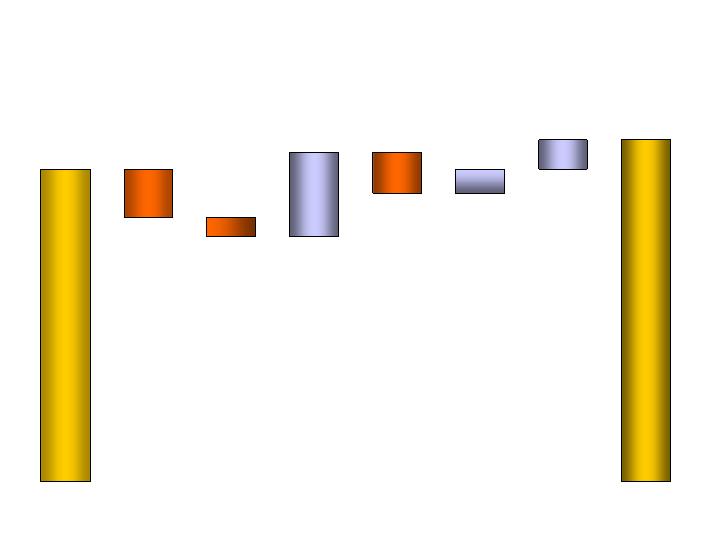
Reuters – movement in 2004 post-tax profit
Let’s start to look at the individual standards in just a little more detail. This slide shows the £12 million increase in post-tax profit
from £329 million to £341 million which you
saw on the previous slide, but it breaks it down by reference to the IFRS accounting standards to
which the adjustment relates. For instance, the first red bar on the chart shows that the capitalisation and impairment of development and
software licence
costs as required by International Accounting Standard 38 results in a net increase in costs of £20 million in 2004. The second
bar shows an increase in employee benefit costs of £8 million in respect of pensions and share-based payments and so
on across the slide.
Analysis of IFRS impact in 2004
The table in your slide booklet at the bottom shows how each line in the statutory P&L which you saw earlier is impacted by the
IFRS accounting standards referred to in this slide, and over the next few slides
I will explain each of these adjustments, as I have said, in a little
more detail. Let’s start with development and software licence costs.
Reuters – development & software licence costs
In line with most other UK companies we have under UK GAAP historically expensed all product development and software
costs as we have incurred them. Under IFRS certain development and software costs
must be capitalised. We will deal with development first.
For us this falls into two distinct categories: product development and the development of in-house internal systems. Most of our product
development spend in the last four years has been
on maintaining and/or enhancing existing products for which we have worked to improve their
competitiveness as part of Fast Forward. Under IFRS we shall continue to expense this type of development cost. To quality for capitalisation,
product development must address a significant new market, which has not already been targeted by an existing Reuters product.

Also related, the development of in-house systems, such as the re-engineering of our order entry billing system, has previously been fully expensed as
incurred. Under IFRS, expenditure on this project
and any other such project must be capitalised and amortised over the system’s useful life. The
second change that IFRS brings is that the cost of acquiring software like this and any direct costs associated with bringing that software into
use must
also be capitalised.
Analysis of development & software licence impact in 2004
How does this all impact our 2004 numbers? As you can see from the slide in your booklet, we spent £132 million on development and
acquired software licences in 2004. Under UK GAAP all
of this was expensed as incurred. IFRS, however, requires £23 million of these development
costs and all £4 million of the software licence costs expensed to be capitalised. Now we have gone back and reviewed development
expenditure and
software licence costs over the last five years, and this resulted in the recognition of an intangible asset on adoption of IFRS at the beginning of 2004 of
£51 million, and the amortisation charge in respect of these previously
capitalised costs now in 2004 under IFRS was £13 million.
However, IFRS also requires that all capital assets, whether acquired or internally generated, be subject to impairment review, if something happens
which causes us to question that asset’s carrying value. As
part of this process, we have carried out impairment reviews on all development costs
capitalised under IFRS over the last five years, all of which, as I have said, have been previously expensed through the P&L under UK GAAP.
We have concluded that it is appropriate to take an impairment charge of £34 million in 2004 against the carrying value of these capitalised assets. Part
of this relates to the development
of Reuters Knowledge for Investment Banking, which we eventually abandoned in favour of the acquired Multex
platform, which gave us the Knowledge product we are selling so successfully today.
The other asset we capitalised and subsequently impaired is our new order entry billing system which is currently being thoroughly reviewed with a view
to scaling the project back to more manageable proportions. It
is this large and one-off charge that causes the £20 million decrease in 2004 profits from
this particular IFRS change.
Reuters – employee benefits (share based payments)
Moving on to share-based payments, under UK GAAP the cost of our long-term incentive plan and other share plans involving direct grants of shares are
taken into the P&L account. No charges have
been recorded in the past for discretionary share options or save as you earn plans. Under IFRS, the cost
of all share-based awards will in future be charged against profit over the vesting period of that award. However, only share
options granted since 7
November 2002 come into scope for this IFRS standard. As a result, the impact in 2004 from this accounting change, which of course has no effect on
cash flow, is limited to the 2003 and 2004 plans but let us be clear
that the charge for share-based payments will grow in 2005 and then grow again in
2006 as more plans come into scope.

Reuters – employee benefits (pension costs)
Now pension costs. IAS 19 requires us to take a fair value approach for the recognition of defined benefit plan assets and liabilities.
UK GAAP takes a longer term view and ignores short-term
fluctuations in asset value. Reuters operates a small number of defined benefit plans. This
covers about 24% of our staff and, as you can see from the table that accompanies this slide in your booklet, the P&L impact of moving
to IFRS was
just £1 million in 2004. The table also shows that at the end of 2004, the present value of net liabilities of these plans increased by £24 million. IFRS
allows for movement caused by actuarial gains and losses
to be taken directly to reserves.
Reuters – goodwill amortisation and impairment
The changes related to goodwill amortisation are straightforward. Under IFRS goodwill no longer needs to be amortised. The £38
million of goodwill amortisation taken in 2004 under UK GAAP
is not required under IFRS. IFRS does require, however, for goodwill to be subject to an
annual impairment review, which could lead to greater volatility in P&L charges going forward. The additional £3 million impairment charge
recognised
in 2004 under IFRS, which is shown again in the table in your booklet, simply reflects the fact that without an amortisation charge in the year, the
goodwill associated with Bridge Trading, which was impaired in anticipation of selling the
business to Instinet, was £3 million higher under IFRS than
under UK GAAP.

Reuters – Disposals
Moving to disposals, accounting for disposals is similar under IFRS except for the additional requirement to include in the
profit and loss calculation any currency gains or losses in respect of the disposed business
that have previously been taken directly to
reserves. Disposal profits and losses under UK GAAP are also impacted by the amount of goodwill that has been amortised on the
business being disposed since that business was acquired. With
no goodwill charge under IFRS, the carrying value of disposed
businesses is likely to be higher, which means that any resulting profit on disposals is likely to be lower. The final adjustment referred to
in the table in your booklets is simply
that, under IFRS, the profit on a disposal made by Radianz in 2004 is shown along with the rest of
Radianz’s results within discontinuing operations.
Reuters – Taxation
Moving on to taxation, we do not expect IFRS to have a material impact on our ongoing tax charges. However, you will
have noticed that the tax charge for 2004 under IFRS was lower, by some £10 million,
even though IFRS profits are higher. This is the
result of some one-off transitional effects on the tax charge under IFRS, which we do not expect to recur in future years.
Reuters – expected impact of IFRS on 2005 profit and EPS
This is an important slide and so it may be worth dwelling on it for an extra minute or two. This shows the main changes that we expect
to see impact our 2005 numbers as a result of the move over
to IFRS. Clearly, it only refers to adjustments that we can reasonably
quantify as we sit here today so that it excludes, for example, adjustments requiring year-end mark to market assessments such as
derivatives.
Working down the slide, we expect operating costs to be impacted negatively by between £15 million and £20 million. Share based
payments will cost us about £20 million more under
IFRS than under UK GAAP in 2005, while we anticipate that the net effect of
development capitalisation, less amortisation, will either be neutral or give us a small benefit of possibly as much as £5 million, and you
can see a range on this number. The
benefit of not having to amortise goodwill will be about £30 million, so we estimate that our 2005
post-tax profit will be between £10 million and £15 million higher under IFRS than under UK GAAP.

Reuters – 2005 Guidance
Finally, I thought I would take the opportunity just to confirm that, whilst the move to IFRS will affect our reported profits in 2005, it has
no effect on the specific guidance that we have previously provided
on our underlying recurring revenue performance in Q1, or on our Fast Forward
cost savings or restructuring charges, or on our estimate of our effective tax charge.
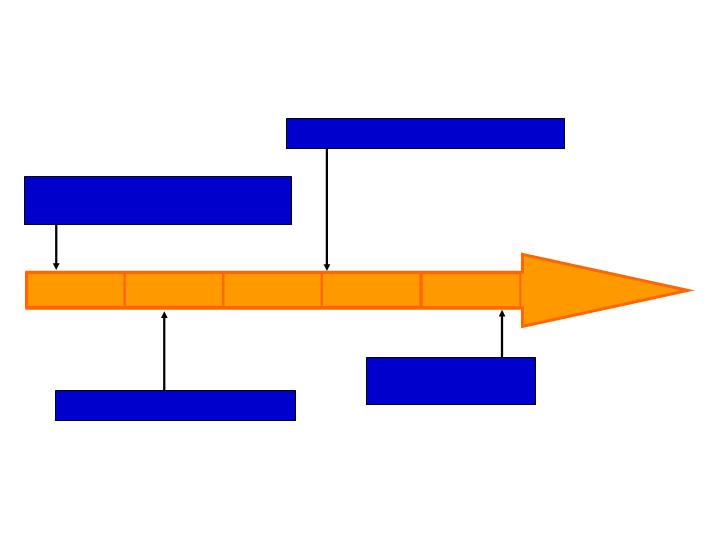
H1 2005 Timetable
Looking forward, the next time you will hear from us is when we report our Q1 revenue numbers on 20 April. Reuters revenue
numbers will remain unchanged by our adoption of IFRS.
I will come back to our 2004 numbers again when we share with you the profitability characteristics of our customer segments on 1
June. We will then move to full IFRS reporting at our interims in July.
I hope this has been helpful. In the audience, we have the team that has been working very hard and very closely with the transition to
IFRS over the last few weeks and we would all be happy to take your
questions.
Questions & Answers
Guy Lamming (Cazenove): Just going back to the slide on page 15, which is your summary of how it will impact
2005, this is the one that
I – and I suppose most of us – find is the most interesting in many ways. Could you just go through that again, slightly more
slowly? I think you said that the additional staff costs, share-based compensation, would be an
additional £20 million. Is that right?
David Grigson: Yes.
Guy Lamming: And is that right as a starting point for forecasting forward, to assume that that will continue at that level?
David Grigson: Let us start with that. I believe I said earlier that it will build in 2005 to £20 million and then
build a little further in 2006. Because it is
not until 2006 that we get the full complement of share schemes with the full vesting across every one of them adding up to that full charge, and then of
course in every future year you add a
new scheme because one drops off, but over the first four years – 2004, 2005 and 2006 – so that is three years
effectively because everything starts at the end of 2002, that builds up; so in 2006 you should assume that it will be a little bit
higher again than the £20
million.
Guy Lamming: £25 million?
David Grigson: I think £25 million is probably not a bad estimate. It is hard for us to be specific on that number because obviously
a lot of things can
happen between now and then, but that is probably not an unreasonable degree of additional set up in that cost.
Guy Lamming: Then if I followed you, you said that the development of the software licence additional cost would be in the order of ?
David Grigson: Neutral to plus £5 million. What we are assuming here, or what we have got budgeted in 2005 on product development
and some
internal systems spend that we now assume will be capitalised because it meets the criteria, we think will be somewhere in the region of £10 million to
£15 million – [
Confers] – yes, £10 million to £15 million. Again that rather depends on exactly how much we spend of course, and we would
then
estimate that the amortisation charge that will flow through in respect of previously capitalised development costs and will be about £10 million. So if we
are at the low end of the capitalisation range they will just net off to zero, if we
end up spending a little bit more and capitalising a little bit more then it
will be a slight net benefit; so about £10 million to £15 million is in the budget variable range for us for this type of expenditure.

Guy Lamming: In terms of, just with your best effort, where you are now and over the next three or four years, is
that net neutral what you
would expect, or is it forecast one way or the other?
David Grigson: By definition as long as you are eventually amortising everything that you have capitalised then it
will be neutral over time.
I guess it rather depends if you try to take a three or four year view on whether or not we have to divert – or whether we
choose to divert – a higher proportion of our development efforts to new products and new initiatives rather than, as we
have tended to do over the
last three or four years, dedicate most of it to fixing our existing products. Clearly we will be able to give you more insight into that when we come back
and talk about life after Fast Forward some time in the third quarter,
but you should assume that probably the amount of capitalised development
costs will grow as we focus more of it on new things, without being able to quantify that of course, and then obviously the amortisation will flow through
subsequently to that.
The other thing I would say is some of you may have heard Tom say at some previous point that we have 2,000 developers in the organisation but we
do not see 2,000 effective man-years of output from that. There
is scope within the development arena to get better productivity from what we do, and
some of the organisational changes that we have made just recently, kind of aligning development, particularly product development, up with the
customer segments much
more closely to the customer-facing guys will help that. So net/net it is probably fair to say that it will be neutral over time.
Guy Lamming: The very last question now; on the slide which gives the summary on page 8, in terms of the stuff that analysts are interested
in, the
development software is a recurring issue which you have talked about, employee benefits is something you have talked about, goodwill amortisation I
think most of us ignore, disposal should not be a recurring item, taxation should not be a recurring
item, and what was the other?
50 pages in the Report & Accounts, believe it or not. Okay? Not a single question in the room?

David Grigson: There is a whole raft of things. If you look at the table beneath that slide, if you have time to go through it –
Guy Lamming: So that is not likely to be recurring?
David Grigson: I think we can keep this really simple and say that development amortisation, capitalisation amortisation is relatively slow
over
time but may just have a slightly lumpy effect but nothing material, and that the big recurring charge which we will incur under IFRS which we didn’t
previously is share-based payments. I think I will leave it at that.
Guy Lamming: The thing to take away from here is that I should take a look at the employee costs line and increase it by £20 million
and then £25
million and then -
David Grigson: And then leave it at that level.
Guy Lamming: Thanks for all the work!
David Grigson: You don’t know how much work went in to reaching that incredibly simple conclusion, because the disclosure accompanying
this
lot is about an extra

Paul Gooden: I might have missed this, if you did comment on this; in terms of your operating margin it has been hit by about a percentage
point in
terms of the 17% to 20% target range. Are you changing that, or will you be changing that?
David Grigson: No. We are treating that rather like the £440m cost savings target from Fast Forward which became
harder because
currency moved against us and we had to save more costs to make up for the fact that the dollar savings were not accumulating in
sterling terms as fast as we wanted them to; so the £440m just became harder because currency moved but we stuck with the
£440m, and exactly the
same for the 17% and 20%. We are sticking with the 17% and 20%; it just became a percent harder to achieve because we now have to carry a share-
based payment cost fundamentally which we would not have incurred
previously. So, we are sticking with that, that is what we aspire to, that is what we
are driving for, and hopefully we will get there.
Polo Tang (UBS): Just to be absolutely clear on what you are saying about the impact on normalised numbers,
because obviously goodwill is
not in the normalised numbers. So what you are saying is that if we look at the forecast for EBITA pre-restructuring
somewhere between £370-400 million. Effectively, what you are saying is of that base of £370-400 million
for ’05 that comes down by £15-20 million at
the bottom line?
David Grigson: That is the bottom line, yes. A normalised EPS is exactly the same… Anything else? All time
record. Nothing on Radianz - everyone happy with that?
Guy Lamming: You did say that as far as the Radianz cash, the impact of the change is £42 million. Do I take it,
therefore, that the
cash on the balance sheet at the point of sale of Radianz was indeed £42 million?
David Grigson: Pretty well and subject to working capital adjustments as on date of completion. No, I do not think
we shall keep
it all, because there are some obligations that Reuters will take on its books rather than leave them with BT in respect of things like
retention benefits and so forth, so it will be a slightly smaller amount.
Guy Lamming: One other question in respect of IFRS. If you work through the turnover of Radianz as a percentage
which was Reuters business
and then the size of the contract over eight and a half years, it looks like the amount you would be paying of £185 million
on average a year is a lot less than the amount that you are paying to Radianz, and it is quite a big spread there. Should
we take that as being the
actual cost saving which will be achieved at some point? How hard was it baked into the Fast Forward?
David Grigson: A level of cost saving, going way back to when we did this work at the end of 2002/beginning of 2003
– a level of assumed
saving was baked into Fast Forward in the fourth quarter. Your basic arithmetic which is to take what the press release says is
the expected total amount of BT’s revenue and our costs over the life of the contract and make some assumption
about how much we are currently
spending in effect through Radianz is right, there is a saving. It is pretty well what we anticipated it to be, more by luck than excellent judgment I think.
We shall not get the full complement
this year. It rather depends on when this deal completes and we have talked about that before, but we will get it in
2006. Therefore, it is in the fourth quarter. What we also talked about is the opportunity once our products
are migrated onto what BT calls ‘new world’
networks, that does give us the opportunity to rationalise a lot of our own infrastructure including things like data centres and to scale them back.
As a consequence of that, we expect further savings post-Fast Forward but we will not get any of that in the 2005/2006 period but perhaps a little in
2007 and probably most by 2008. So there will
be a little more there but, to try to come back and be specific on what that means is when we come
back in the third quarter and talk about life after Fast Forward and we shall try to quantify that then. I wish I hadn’t asked if there are
any more
questions! Charles, go on – don’t feel obliged.

Charles Peacock: Now we are on the subject of Radianz, could you explain a little bit more about the nature of the
network service agreement
in terms of how it runs through into your costs in future: how fixed, how variable?
David Grigson: It is a contract which, in the initial phase, effectively takes everything that Radianz does, moves it into
BT and adjusts
it onto what BT call a price book, which says that for every circuit there is now a price. Whereas Radianz was a company that mostly
charged on a cost plus basis, this is a price book basis. If you add things to it, your costs go up;
if you take things away, your costs will go down. It is a
contract which allows for a fair degree of flexibility but, over the first two or three years, the principal focus both on the BT side and indeed on the
Reuters side –
and it will take both of us to work very hard at it – is to make these migrations that we talked about, particularly product migrations, away
from old and expensive legacy networks to cheaper and better, both from the customer perspective and ultimately
from the cost perspective, modern
new world networks, and there is quite a lot of IP enablement work that has to go on to make that possible.

That will take until the end of 2007 to be done, in which case we have everything on the right network, we are in the position where we can
rationalise internally and take full advantage of that. The
customers are getting a much better service and the contract then allows for the same
degree of ongoing flexibility which means we can add more stuff because we are growing our business and add more customers our costs go up. If
we want to
take stuff away because we are losing a customer, then our costs will go down. So it is a contract which, ultimately and importantly,
promotes exactly the right behaviour in Reuters in terms of its relationship with the customers and will allow
us to optimise our business model, and
has an exactly aligned behaviour on the BT side of the fence as well. Therefore, in that sense it works very well for both sides.
Paul Gooden: Just while we are off the IFRS piste and given that we are all here, would you comment on trading
in February, were net sales
positive?
[laughter]
David Grigson: The predicted question. No, I would rather not on the basis that, if we get into the habit, and we
shall be meeting
a few times this year, of commenting on every month’s sales activities, that could ultimately do us more harm than good, if only
because we all know that sales numbers are not necessarily great indicators in any given month of the way trends are moving. We
said that January
had got us off to a good start because it was a positive month, it was better than our own internal budgets had assumed, so that is a good way to
start the new year. Certainly, in terms of giving you some support for why
we still stuck to the 1.5% recurring revenue decline in Q1, it helps to
reinforce that that was a good number. No, I am not. The time to come back and talk about it is when we can give you the quarter’s sales number,
which
we shall do including, of course, the critically important quarter end month of March and leave it at that. Thank you all again for coming and
taking the time, I really appreciate it.
- Ends -